

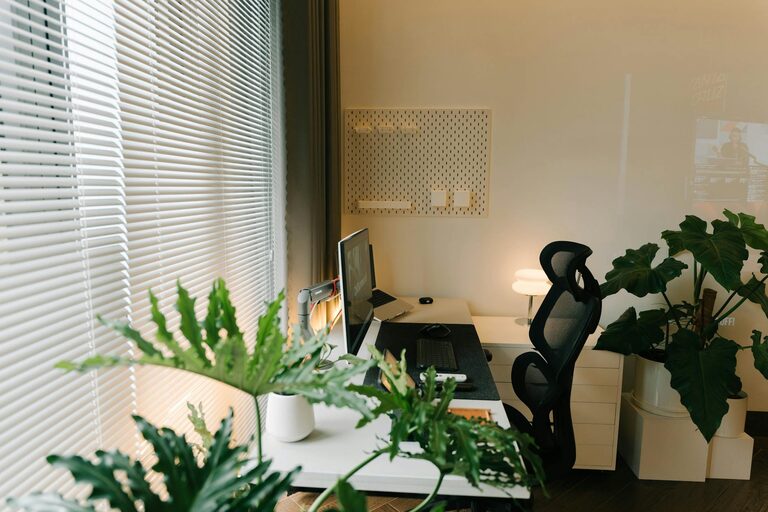
Creating a productive home office environment is essential for anyone working remotely or running a business from home. A well-designed workspace can improve focus, reduce distractions, and boost overall job satisfaction. Whether you have a dedicated room or a small corner of your home, these tips will help you create an environment suited to productivity and comfort.
1. Choose the Right Location
Your home office should be in a quiet area with minimal foot traffic and distractions. Consider a spare room, a closed-off corner, or even a converted closet. Ideally, select a space near a window to benefit from natural light, which can enhance mood and energy.
Key points:
– Avoid high-traffic areas like living rooms or kitchens if possible.
– Ensure the space has adequate electrical outlets.
– Check for good internet connectivity.
2. Invest in Ergonomic Furniture
Comfort plays a significant role in productivity. An ergonomic office chair and desk can prevent back pain and fatigue, allowing you to work longer and more efficiently.
Suggested furniture features:
– Adjustable chair height and lumbar support.
– Desk at a height where your elbows are bent at a 90-degree angle while typing.
– Consider a sit-stand desk to change positions throughout the day.
3. Optimize Lighting
Lighting affects your ability to focus and reduces eye strain. Aim for a combination of natural and artificial lighting to brighten your workspace.
Lighting tips:
– Use daylight bulbs in desk lamps to mimic natural light.
– Position your desk perpendicular to windows to avoid glare on screens.
– Add adjustable lighting for late work hours or darker days.
4. Keep Your Workspace Organized
Clutter can negatively impact your concentration. A tidy environment helps maintain a clear mind and efficient workflow.
Organization strategies:
– Use storage bins, shelves, or filing cabinets to keep documents and supplies organized.
– Implement cable management solutions to tidy wires.
– Develop a daily or weekly routine to tidy your desk.
5. Personalize Your Space
Adding a personal touch can make your home office a more inviting place to work and boost motivation.
Ideas for personalization:
– Incorporate plants, which improve air quality and add greenery.
– Display artwork or photos that inspire or relax you.
– Choose decor and colors that make you feel comfortable and focused.
6. Minimize Distractions
Maintaining focus is key to productivity. Find ways to limit interruptions and create a work-focused mindset.
How to minimize distractions:
– Use noise-canceling headphones or white noise apps.
– Set clear boundaries with household members about your work hours.
– Disable non-work-related notifications on your devices during work time.
7. Set Up Necessary Technology & Tools
Ensure your home office is equipped with reliable technology to avoid unnecessary interruptions.
Essential tech considerations:
– High-speed internet connection.
– Quality headset or microphone for virtual meetings.
– Backup power source like a UPS for important devices.
8. Establish a Routine
A consistent routine helps train your brain to shift into work mode.
Tips for routines:
– Set regular work hours to create structure.
– Begin each day by reviewing priorities.
– Take regular breaks to stretch and refresh your mind.
9. Maintain Good Air Quality and Temperature
A comfortable temperature and fresh air help maintain energy levels and cognitive function.
Suggestions:
– Open windows periodically to let in fresh air.
– Use fans or heaters to regulate temperature.
– Consider air purifiers if indoor air quality is poor.
Conclusion
Designing a productive home office doesn’t require a large budget or space. By choosing the right location, investing in comfortable furniture, optimizing light and organization, and setting up effective routines, you can enhance your work-from-home experience. Personalizing your workspace and minimizing distractions can also contribute to your focus and motivation. Use these tips to create a home office environment that supports your productivity and well-being.